
背景
我经常用Zoom开会,因为我的zoom会议都是自动云端录像的,所以云端的10G存储空间动不动就满了,我需要手动下载再清空云端存储,但是手动一个一个下载又太费时间了
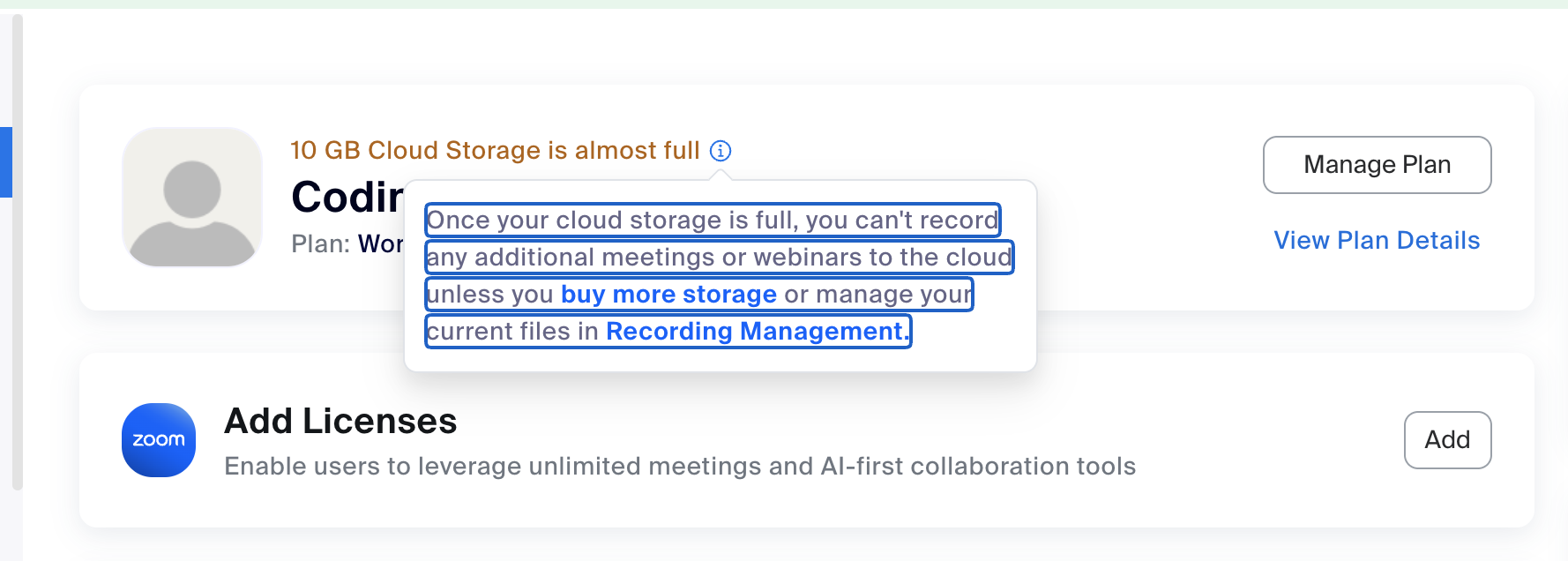
我就用OpenCode+Gemini 3 Pro帮我写下载视频的脚本
设置OpenCode
这一步可以参考我之前的文章用 OpenCode 编排 Agent Skills,打造智能简历优化流水线
配置Zoom访问登陆
这里需要使用Zoom的marketplace来创建一个我们专属的app,
进入Zoom marketplacehttps://marketplace.zoom.us/
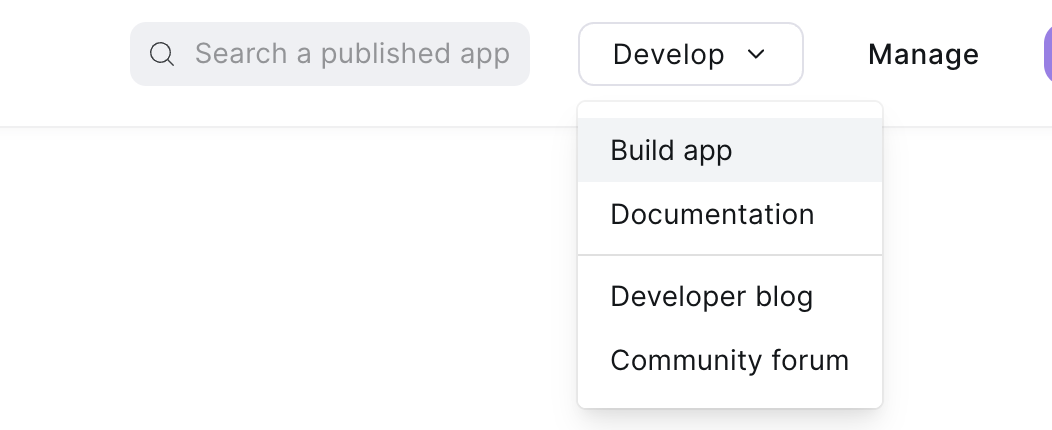
右侧选Develop->Build App
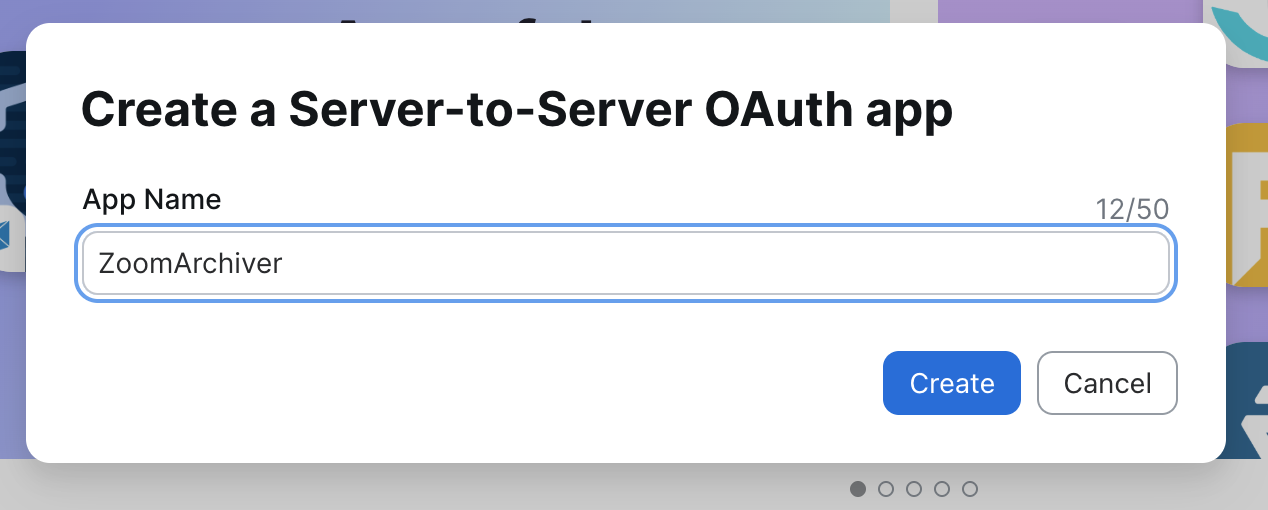
要选“Server-to-Server Auth App"

起一个名字
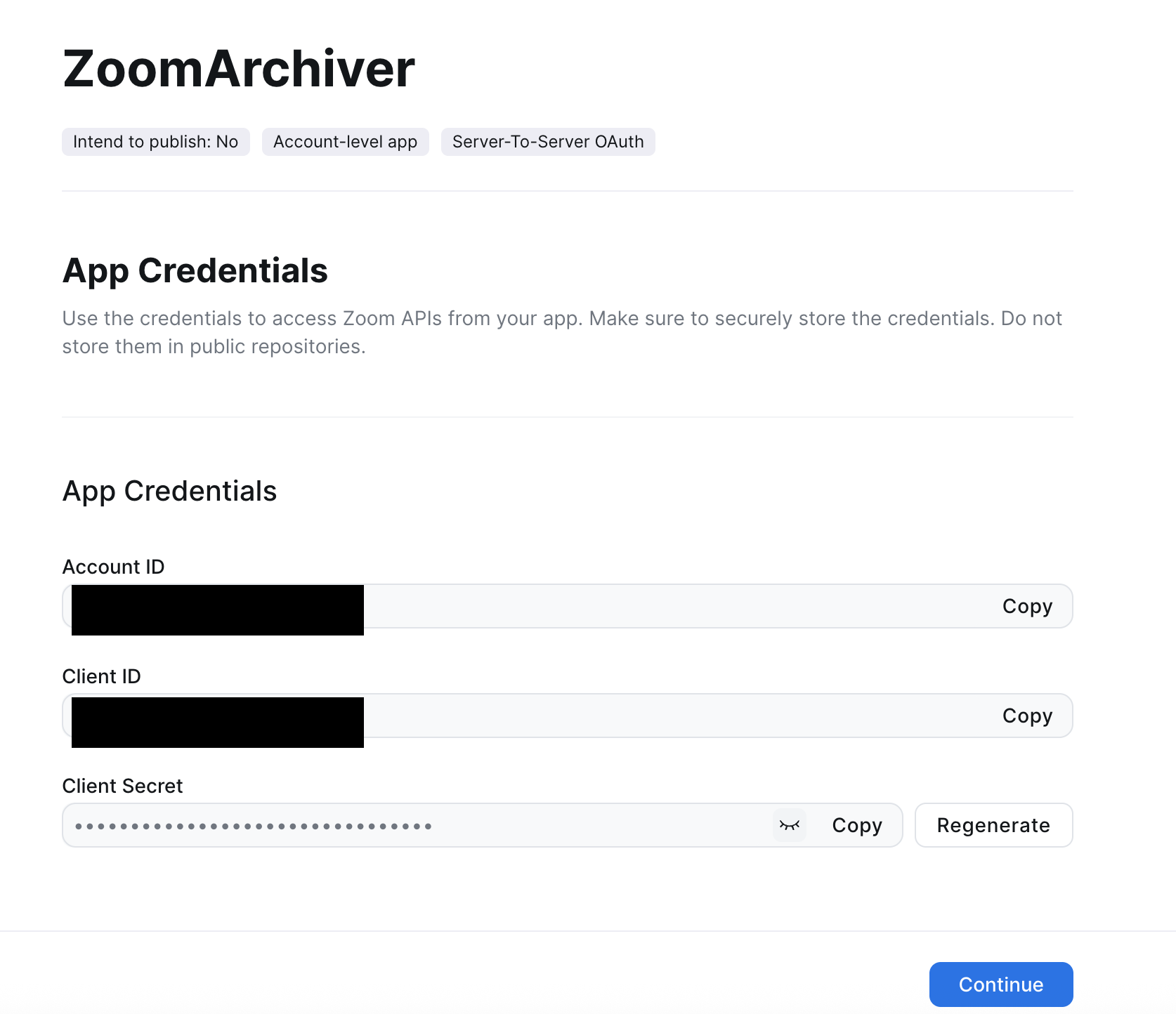
就会得到一组credential,记下来写到".env"文件里
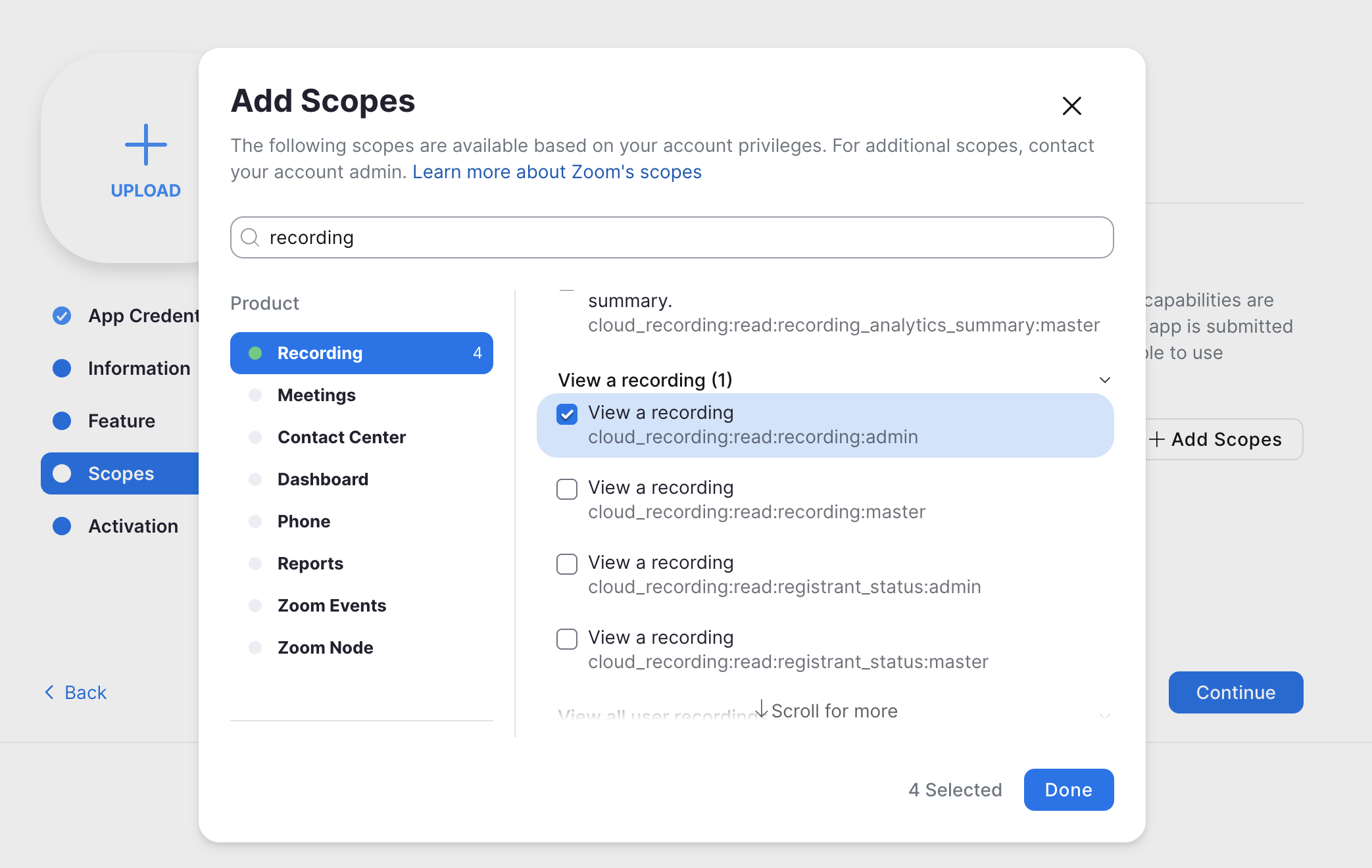
填入Information和Feature,然后在Scope中,点击 “Add Scope”,一定要加入cloud_recording:read:recording:admin, user:read:list_users:admin,user:read:list_users:admin,cloud_recording:read:list_user_recordings:admin,cloud_recording:read:list_account_recordings:admin
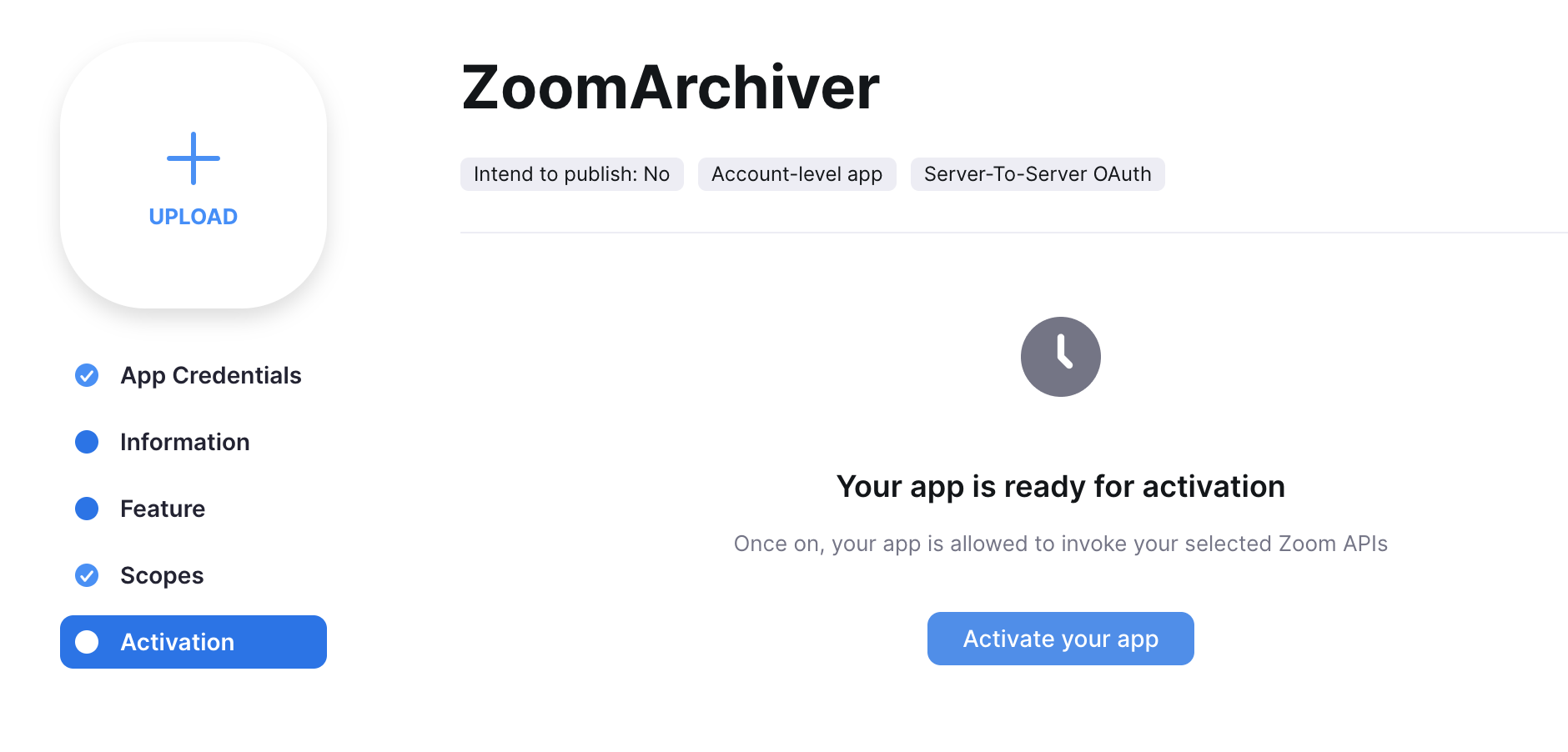
最后可以激活app
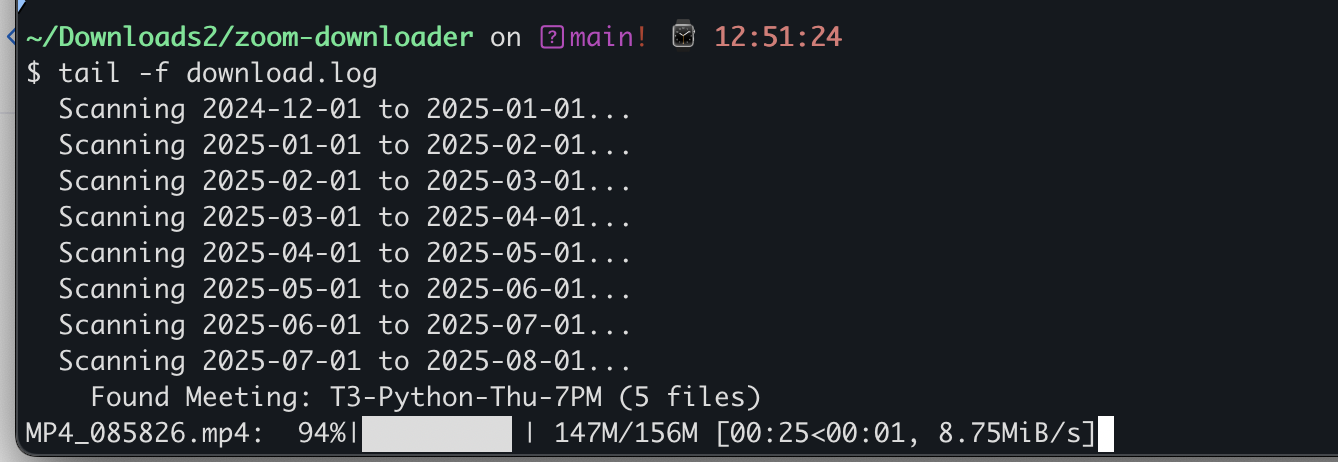
本地配合".env"文件,运行uv run zoom_downloader.py
自动下载效果:
代码供参考
zoom_downloader.py
import os
import requests
import datetime
from dateutil.relativedelta import relativedelta
from dotenv import load_dotenv
import base64
import time
from tqdm import tqdm
import re

# Load environment variables
load_dotenv()

# Configuration
ACCOUNT_ID = os.getenv("ZOOM_ACCOUNT_ID")
CLIENT_ID = os.getenv("ZOOM_CLIENT_ID")
CLIENT_SECRET = os.getenv("ZOOM_CLIENT_SECRET")
START_DATE = os.getenv("START_DATE", "2019-01-01")
DELETE_AFTER_DOWNLOAD = os.getenv("DELETE_AFTER_DOWNLOAD", "False").lower() == "true"
DOWNLOAD_DIR = "downloads"

# API Endpoints
TOKEN_URL = "https://zoom.us/oauth/token"
BASE_URL = "https://api.zoom.us/v2"


def get_access_token():
    """Obtains a Server-to-Server OAuth token."""
    if not all([ACCOUNT_ID, CLIENT_ID, CLIENT_SECRET]):
        print("Error: Missing credentials in .env file.")
        return None

    auth_str = f"{CLIENT_ID}:{CLIENT_SECRET}"
    b64_auth = base64.b64encode(auth_str.encode()).decode()

    headers = {
        "Authorization": f"Basic {b64_auth}",
        "Content-Type": "application/x-www-form-urlencoded",
    }

    data = {"grant_type": "account_credentials", "account_id": ACCOUNT_ID}

    try:
        response = requests.post(TOKEN_URL, headers=headers, data=data)
        response.raise_for_status()
        return response.json()["access_token"]
    except requests.exceptions.RequestException as e:
        print(f"Failed to get access token: {e}")
        # 'response' might not be defined if the request failed before returning
        if "response" in locals() and response and response.text:
            print(f"Response: {response.text}")
        return None


def get_users(headers):
    """Fetches all users in the account."""
    users = []
    page_token = ""

    print("Fetching user list...")
    while True:
        params = {"page_size": 300, "next_page_token": page_token}
        try:
            response = requests.get(f"{BASE_URL}/users", headers=headers, params=params)
            response.raise_for_status()
            data = response.json()
            users.extend(data.get("users", []))
            page_token = data.get("next_page_token")
            if not page_token:
                break
        except requests.exceptions.RequestException as e:
            print(f"Error fetching users: {e}")
            if hasattr(e, "response") and e.response is not None:
                print(f"API Response: {e.response.text}")
            break

    print(f"Found {len(users)} users.")
    return users


def get_recordings(headers, user_id, start_date, end_date):
    """Fetches recordings for a specific user within a date range."""
    recordings = []

    formatted_from = start_date.strftime("%Y-%m-%d")
    formatted_to = end_date.strftime("%Y-%m-%d")

    try:
        params = {
            "userId": user_id,
            "from": formatted_from,
            "to": formatted_to,
            "page_size": 300,
        }
        response = requests.get(
            f"{BASE_URL}/users/{user_id}/recordings", headers=headers, params=params
        )

        if response.status_code == 404:
            # User might not exist or has no recordings capability
            return []

        response.raise_for_status()
        data = response.json()
        recordings.extend(data.get("meetings", []))
    except requests.exceptions.RequestException as e:
        print(
            f"Error fetching recordings for user {user_id} ({formatted_from} - {formatted_to}): {e}"
        )

    return recordings


def sanitize_filename(name):
    """Removes illegal characters from filenames."""
    return re.sub(r'[\\/*?:"<>|]', "", name)


def download_file(url, file_path, file_size, access_token):
    """Downloads a file with progress bar and resumes if possible."""

    # Check if file exists and is complete
    if os.path.exists(file_path):
        existing_size = os.path.getsize(file_path)
        if existing_size == file_size:
            print(f"Skipping (already exists): {os.path.basename(file_path)}")
            return True
        else:
            print(f"File incomplete. Re-downloading: {os.path.basename(file_path)}")

    # Prepare headers (append access token to download url is usually required for Zoom)
    # Note: Zoom download_url usually includes a token, but for S2S we might need to append the access_token query param
    # or just use the download_url provided.
    # The 'download_url' in the API response usually requires an active session or access_token appended.

    download_url_with_token = f"{url}?access_token={access_token}"

    try:
        response = requests.get(download_url_with_token, stream=True)
        response.raise_for_status()

        total_size = int(response.headers.get("content-length", 0))
        # If API provided file_size, use that as authoritative source if header is missing
        if total_size == 0:
            total_size = file_size

        with (
            open(file_path, "wb") as f,
            tqdm(
                desc=os.path.basename(file_path),
                total=total_size,
                unit="iB",
                unit_scale=True,
                unit_divisor=1024,
            ) as bar,
        ):
            for data in response.iter_content(chunk_size=1024):
                size = f.write(data)
                bar.update(size)

        # Final verification
        if os.path.getsize(file_path) == file_size:
            return True
        else:
            print("Warning: Downloaded file size does not match expected size.")
            return False

    except Exception as e:
        print(f"Failed to download {url}: {e}")
        return False


def delete_recording_file(headers, meeting_id, recording_id):
    """Deletes a specific recording file from Zoom."""
    try:
        url = f"{BASE_URL}/meetings/{meeting_id}/recordings/{recording_id}"
        response = requests.delete(url, headers=headers)
        response.raise_for_status()
        print(f"Deleted recording file {recording_id} from Zoom.")
        return True
    except requests.exceptions.RequestException as e:
        print(f"Error deleting recording {recording_id}: {e}")
        return False


def main():
    print("=== Zoom Downloader Started ===")

    # 1. Get Token
    token = get_access_token()
    if not token:
        return

    headers = {"Authorization": f"Bearer {token}"}

    # 2. Get Users
    users = get_users(headers)

    # DRY RUN MODE
    DRY_RUN = False
    if DRY_RUN:
        print("\n*** DRY RUN MODE: No files will be downloaded ***\n")

    start_dt = datetime.datetime.strptime(START_DATE, "%Y-%m-%d")
    end_dt = datetime.datetime.now()

    for user in users:
        email = user.get("email")
        user_id = user.get("id")
        print(f"\nProcessing User: {email}")

        current_dt = start_dt
        while current_dt < end_dt:
            # Chunk by 1 month (Zoom API limit)
            next_month = current_dt + relativedelta(months=1)
            # Don't go into the future
            if next_month > end_dt:
                next_month = end_dt

            print(
                f"  Scanning {current_dt.strftime('%Y-%m-%d')} to {next_month.strftime('%Y-%m-%d')}..."
            )

            recordings = get_recordings(headers, user_id, current_dt, next_month)

            for meeting in recordings:
                topic = sanitize_filename(meeting.get("topic", "Untitled Meeting"))
                start_time = meeting.get("start_time", "")[:10]  # YYYY-MM-DD
                meeting_id = meeting.get("id")

                # Create Directory
                folder_name = f"{start_time} - {topic} ({meeting_id})"
                user_dir = os.path.join(DOWNLOAD_DIR, email, folder_name)

                if not DRY_RUN:
                    os.makedirs(user_dir, exist_ok=True)

                print(
                    f"    Found Meeting: {topic} ({len(meeting.get('recording_files', []))} files)"
                )

                for file_info in meeting.get("recording_files", []):
                    file_type = file_info.get("file_type", "UNKNOWN")
                    file_ext = file_info.get("file_extension", "mp4").lower()
                    recording_id = file_info.get("id")
                    file_size = file_info.get("file_size", 0)
                    download_url = file_info.get("download_url")

                    # Construct nice filename
                    # e.g. 2023-01-01_1030_MP4_1280x720.mp4
                    rec_start = file_info.get("recording_start", "")[11:19].replace(
                        ":", ""
                    )
                    filename = f"{file_type}_{rec_start}.{file_ext}"
                    full_path = os.path.join(user_dir, filename)

                    if download_url:
                        if DRY_RUN:
                            print(
                                f"      [DRY RUN] Would download: {filename} ({file_size / 1024 / 1024:.2f} MB)"
                            )
                            success = True  # Simulate success
                        else:
                            success = download_file(
                                download_url, full_path, file_size, token
                            )

                        if success and DELETE_AFTER_DOWNLOAD:
                            if DRY_RUN:
                                print(
                                    f"      [DRY RUN] Would DELETE from Zoom: {filename}"
                                )
                            else:
                                delete_recording_file(headers, meeting_id, recording_id)

            current_dt = next_month
            # Small sleep to be nice to API rate limits
            time.sleep(0.2)

    print("\n=== All Downloads Complete ===")


if __name__ == "__main__":
    main()